Key Stakeholders in ERP Implementation
- Thorough project planning and management will make it possible for us to set up short- and long-term goals to achieve the vision. Appoint the individuals who will oversee the implementation process and check that tasks are accomplished within time and money limits.
- The process of data migration and conversion from the old system to the new ERP stands as a significant step. To ensure the accuracy of data, we need data cleansing, mapping, and validation approaches as we go through the process.
- The well-being of a training program should be the priority, which is aimed at accomplishing the skill set required to use the ERP system to its maximum potential. Adoption of users is the most important KPI.
- Extensive systems testing and quality assurance techniques with a focus on identifying any potential complications and discrepancies before going live will aid in making the system more effective. Strategic testing will lead to a less rough transition.
- Continuous support and maintenance are required to maintain the system in its proper and maximum performance. The system continues to be updated, various troubleshooting tasks are done, and continuous improvement remains an integral part of its effectiveness when faced with changing business demands.

ERP Software Integration: Connecting Systems for Seamless Operations
Your ERP system is your financial control center, but to unleash its full potential, it needs to work with other apps. Isolation leads to manual data entry, delays, errors, and reduced productivity. Therefore, integration with ERP software used by different teams is the key to maximising its benefits.
Importance of ERP Software Integration
A well-connected ERP system can enable the smooth flow of data and information between various systems of your company, paving the way for quick decision-making, heightened efficiency, and better teamwork across different departments. This not only enhances customer service but also boosts adaptability and reduces costs, making it essential for modern businesses.
Types of ERP Software Integration
- Integrating ERP with accounting software ensures accurate financial data synchronisation, streamlining financial reporting, and enhancing compliance. This integration also enables real-time visibility into financial transactions and balances.
- Integrating business ERP with CRM systems provides a holistic view of customer interactions, order history, and preferences. This alignment helps sales and customer support teams deliver better service and target marketing efforts effectively.
- Integrating ERP Software with SCM systems enhances inventory control, demand forecasting, and order fulfillment. This integration optimises supply chain processes, reducing lead times and costs.
Benefits and Challenges of ERP Software Integration
Integrating ERP software offers a host of advantages, like getting your data spot on, minimising the need for manual data input, and cranking up productivity while streamlining day-to-day operations. But it’s not all smooth sailing – there are hurdles to overcome, such as making sure different systems play nice together, safeguarding your data, and handling the intricacies of integration projects.
In the fiercely competitive business world we navigate today, weaving ERP into your setup isn’t just an option; it’s a strategic must for staying nimble and tuned in to market shifts.
Read more: A Comprehensive Guide for SMEs to Choose ERP Software
Different Solutions for ERP Systems

Now, let’s find out the diversity of ERP system solutions. There are various options, each with its benefits and features. This overview will help you understand the choices and find what suits your business best.
Solutions by Module
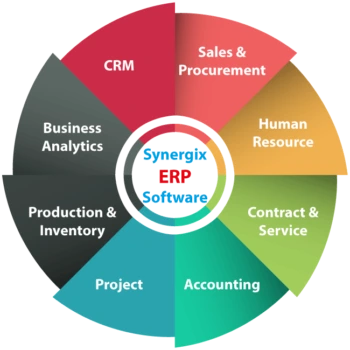
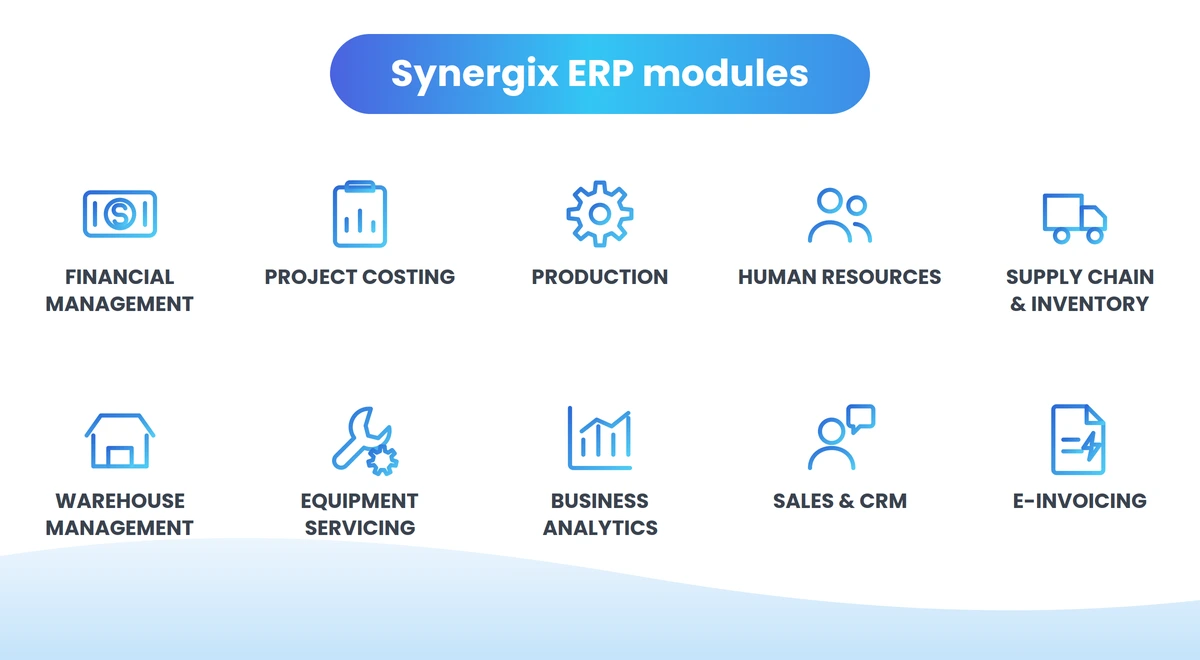
When it comes to modules, ERP solutions offer a wide range of tools and features to address specific aspects of business management. Here are some key modules:
- E-invoice modules handle invoicing activities in an efficient and effective way thus assisting organizations in their financial transactions and dealings. These modules provide solutions for creating and sending e-invoices, data validation, and connectivity to accounts systems of ERP, aiming at minimising potential errors and increasing compliance with tax legislation.
- Business Analytics modules provide valuable insights through data analysis, helping organisations make informed decisions and optimise their strategies. They include advanced reporting and data visualisation tools, predictive analytics, and data mining capabilities, allowing businesses to identify trends, forecast future performance, and adapt their operations accordingly.
- Contract Management modules simplify the process of creating, monitoring, and managing contracts, reducing administrative burdens and minimising legal risks. These modules often feature contract templates, electronic signature capabilities, automated alerts for contract milestones, and advanced search functionality, ensuring that businesses can easily track contract compliance and renewals.
- Customer Relationship Management modules improve customer interactions and relationship management, enhancing the overall customer experience. They include tools for lead management, sales automation, customer support, and marketing campaign management. CRM systems enable businesses to centralise customer data, track interactions, and provide better service, ultimately fostering customer loyalty and driving sales growth.
- Equipment Servicing Management modules help organisations efficiently manage their equipment maintenance and servicing schedules, ensuring equipment reliability. Features may include equipment tracking, maintenance scheduling, work order management, and integration with IoT devices to monitor equipment health in real time. By proactively managing equipment maintenance, businesses can reduce downtime and extend the lifespan of their assets.
- Financial Management modules empower businesses to handle their finances, including budgeting, accounting, and financial reporting, with precision. They encompass functions like general ledger management, accounts payable and receivable, financial forecasting, and asset management, ensuring that financial data is accurate and accessible for strategic decision-making.
- Human Resource Management modules streamline various HR functions, from recruitment to payroll and performance management, ensuring a well-organised workforce. They typically offer features for employee self-service, benefits administration, talent acquisition, and performance evaluation, providing a comprehensive HR solution that enhances employee productivity and satisfaction.
- Production Management modules optimise production processes, from planning and scheduling to quality control. They may include features like production planning, work order management, real-time production monitoring, and quality assurance checks, ensuring efficient production workflows and maintaining product quality.
- Project Costing Management modules help businesses monitor project costs, making it easier to stay within budget and meet financial goals. This module often offers cost tracking, budgeting, resource allocation, and variance analysis features, allowing organisations to maintain profitability and effectively manage project finances.
- Supply Chain Management modules improve the efficiency of the supply chain, enhancing logistics and reducing costs. They include tools for inventory management, demand forecasting, order processing, and supplier collaboration, enabling businesses to optimise their supply chain processes, reduce inventory carrying costs, and meet customer demands more effectively.
- Vertical Extension modules provide industry-specific customisation, adapting ERP solutions to the unique requirements of different sectors. These modules are highly specialised, addressing specific industry needs such as compliance regulations, reporting requirements, and industry-specific processes. They ensure that the ERP system aligns perfectly with the business’s niche, maximising its operational efficiency.

Solutions by Industry
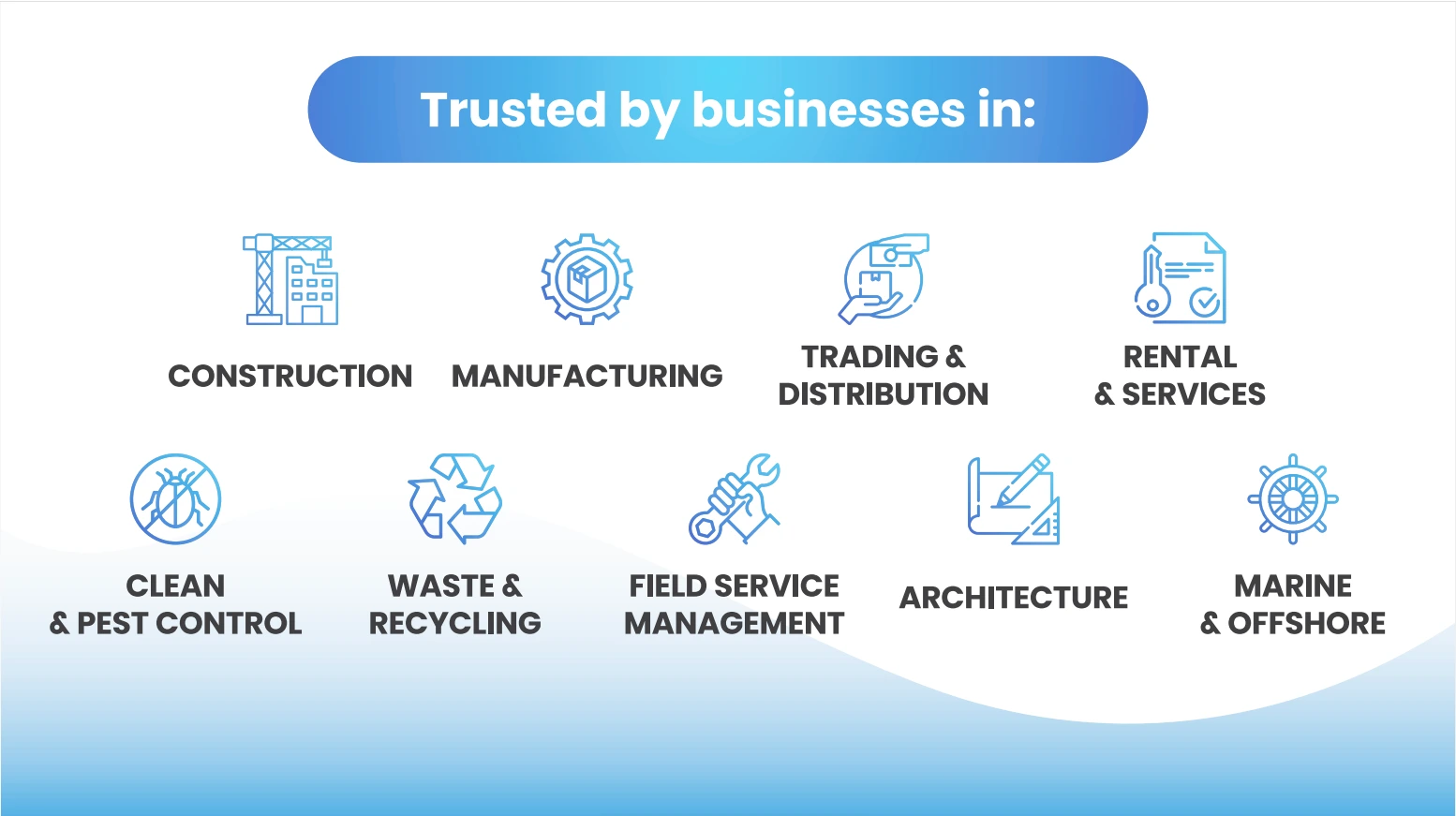
ERP solutions are also tailored to specific industries, addressing their unique demands. Let’s explore some industry-specific solutions:
- Construction ERP systems are designed to manage complex construction projects, ensuring project efficiency and cost control. They feature tools for project management, cost estimating, subcontractor management, and construction-specific financial modules to meet the specific challenges of the construction industry.
- Construction Schedule of Rates (SOR) modules focus on pricing and managing construction projects effectively. They allow construction companies to accurately price projects, manage rates for various activities, and maintain profitability.
- Architecture software assists architects and designers in project planning, design, and execution, improving design accuracy and collaboration. These modules may include features for 3D modeling, rendering, and collaboration tools, allowing architects to bring their designs to life with precision.
- Wholesale Distribution solutions optimise inventory management and supply chain operations for distribution businesses. They include features for order processing, demand forecasting, warehouse management, and supplier collaboration, ensuring the efficient flow of goods to customers.
- ERP solutions for general manufacturing streamline manufacturing processes, from production planning to quality control. They include features for the bill of materials, work order management, quality assurance, and shop floor control, allowing manufacturers to optimise production and ensure product quality.
- Marine Engineering solutions are tailored to the maritime industry, addressing maintenance, logistics, and compliance requirements. They include features for vessel maintenance, spare parts management, voyage planning, and regulatory compliance, ensuring the smooth operation of maritime businesses.
- ERP software for Rental and service businesses helps manage equipment and service requests efficiently. They include tools for rental scheduling, maintenance tracking, service dispatch, and customer billing, ensuring efficient service operations.
- Waste Management solutions facilitate waste collection, recycling, and disposal operations, ensuring environmental compliance. They include features for route optimisation, landfill management, recycling tracking, and environmental reporting, helping waste management businesses operate sustainably and efficiently.
- Field Service Management (FSM) can help businesses manage things like work orders, schedules, and dispatching, as well as keep an eye on how your on-site technicians are doing. This solution helps companies provide top-notch service, thanks to real-time control over what’s happening in the field. It’s all about boosting productivity and keeping customers happy.
- Cleaning Solutions modules are designed for cleaning service providers, helping with scheduling and resource management. They may include features for client scheduling, staff management, inventory tracking, and quality control, ensuring that cleaning service businesses can optimise their operations and deliver high-quality services.
- Laundry Management solutions streamline laundry operations, from inventory management to customer service. They include features for laundry scheduling, inventory tracking, customer management, and billing, ensuring that laundry businesses can efficiently handle customer orders and maintain inventory control.
- ERP solutions for the Food and Beverage industry enhance operations in areas such as supply chain, inventory, and menu management. They include features for food sourcing, inventory tracking, recipe management, and menu planning, ensuring that F&B businesses can maintain food quality, manage inventory efficiently, and offer diverse and appealing menus to their customers.
The Importance of ERP in Modern Business

It’s no exaggeration to say that an ERP system is essential for any modern-day company, especially the ones that aim to streamline their internal operations, adapt to the dynamic needs of their customers, and scale their business operations. Given its critical role, let’s find out what the elements are that make this tool so important.
Enhancing Efficiency and Productivity
ERP systems play a vital role in boosting efficiency and streamlining business processes within organisations. They achieve this by automating time-consuming manual tasks, cutting down on data entry slip-ups, and giving users instant access to vital information. This upswing in efficiency not only leads to cost savings but also frees up employees to concentrate on tasks that truly add value.
Data Accuracy and Real-time Reporting
ERP systems offer a single source of truth for data, ensuring data accuracy and consistency. Real-time reporting and analytics capabilities empower businesses with up-to-the-minute insights into their performance, enabling quicker and more informed decision-making.
Facilitating Informed Decision-Making
Thanks to their robust data analytics and reporting tools, ERP systems empower organisations to make decisions based on concrete information. These systems offer valuable insights into market trends, customer behaviour, and operational efficiency, giving businesses the ability to adjust and flourish in competitive landscapes.
Supporting Business Growth and Scalability
As businesses grow, ERP systems can smoothly expand to keep pace with their needs. They offer the agility and adaptability required to respond to shifting market dynamics, incorporate new users or features, and stay in sync with emerging technologies.
In today’s fast-moving and data-centric business world, ERP software has evolved into an essential asset for organisations striving to maintain a competitive edge, boost operational efficiency, and fuel their expansion. Its knack for streamlining operations, improving decision-making, and flexibly meeting evolving business demands cements its role as a key pillar in modern business triumph.
How to Effectively Utilise ERP Software in Your Company?
Knowing that ERP systems are essential for your business, the next step is to explore strategies for harnessing the full potential of ERP software within your organisation, ensuring they become powerful tools for efficiency and growth.
Aligning ERP with Business Objectives
To maximise the benefits of ERP software, it’s essential to align its functionalities with your company’s specific business objectives. Begin by conducting a thorough needs analysis to identify areas where the ERP software can drive efficiency and support your strategic goals.
Customisation and Configuration
While ERP software comes with standard modules, customisation and configuration are often necessary to tailor the system to your company’s unique processes. Collaborate with ERP experts to ensure that the system is optimised to meet your specific requirements without unnecessary complexity.
User Training and Adoption Strategies
User training and adoption are critical for ERP success. Develop comprehensive training programs that empower employees with the skills and confidence to navigate and utilise the ERP software effectively. Encourage a culture of user adoption by emphasising the benefits and long-term value it brings to their daily tasks.
Continuous Improvement and Updates
ERP software evolves, and it’s crucial to stay current with updates and enhancements. Implement a strategy for ongoing system improvement, including regular updates, performance monitoring, and feedback loops. This ensures that your ERP software remains aligned with changing business needs and industry trends.
Trends and Future Developments in ERP

ERP systems have continued to evolve over time, and these crucial business systems still hold a lot of growing potential in the future, such as:
- Emerging Technologies in ERP: ERP systems are keeping up with the times by adopting the latest tech trends like AI, machine learning, and IoT to level up their functionalities. An AI-powered ERP system puts these capabilities to work for predictive analysis, anomaly detection, and intelligent automation, empowering businesses to make smarter decisions. Singapore SMEs are increasingly adopting these tools — see how AI-powered ERP systems support growing businesses.
- Industry-specific ERP Solutions: Tailored ERP solutions for specific industries are making their mark. These custom-made systems are crafted to address the distinct requirements of particular sectors, like healthcare, manufacturing, and retail. They come equipped with specialised modules and features that harmonise with industry standards and guidelines, resulting in a more streamlined and compliant operation.
- Cloud-Based ERP and Mobility: More and more businesses are hopping on the cloud-based ERP bandwagon. Cloud ERP brings flexibility, scalability, and cost savings to the table, which is drawing in companies of all shapes and sizes. What’s more, the addition of mobile features means users can tap into ERP tools and data while on the move, giving a boost to productivity and responsiveness.
As ERP systems evolve, businesses can benefit from enhanced functionality, industry-specific customisation, and greater accessibility through cloud and mobile technologies. Staying abreast of these trends is crucial for organisations looking to remain competitive and agile in the ever-evolving business landscape.
ERP in Practice: What Singapore SMEs Report
Synergix Technologies is a Singapore-based full-service ERP partner for SMEs and mid-sized enterprises. We develop our own ERP system in-house, which is what makes deep customisation possible without putting future upgrades at risk. Industry-specific solutions, business process consulting, implementation, training and long-term local support sit under one roof.
Over 35 years, we’ve worked with more than 600 Singapore SMEs and 30,000 users. Below is what that looks like in practice, taken from signed testimonial letters published in full on our site.
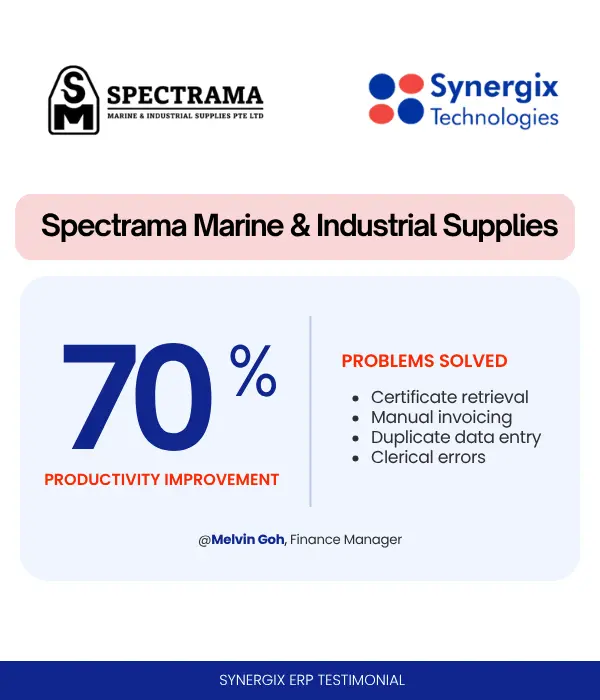
Spectrama Marine & Industrial Supplies – around 70% productivity improvement
Before Synergix, the bottleneck was certification records. Staff spent considerable time searching through old files to locate historical certificates, and delivery orders and tax invoices were prepared largely by hand.
With Synergix ERP, all certification records sit in one database, so past certificates are found in a fraction of the time. Quotations, delivery orders, and tax invoices are generated within a single system, which removed the duplicate data entry between them and reduced clerical errors. Finance Manager Melvin Goh estimates the result at roughly 70% improvement, with the team now responding to customer requests faster.
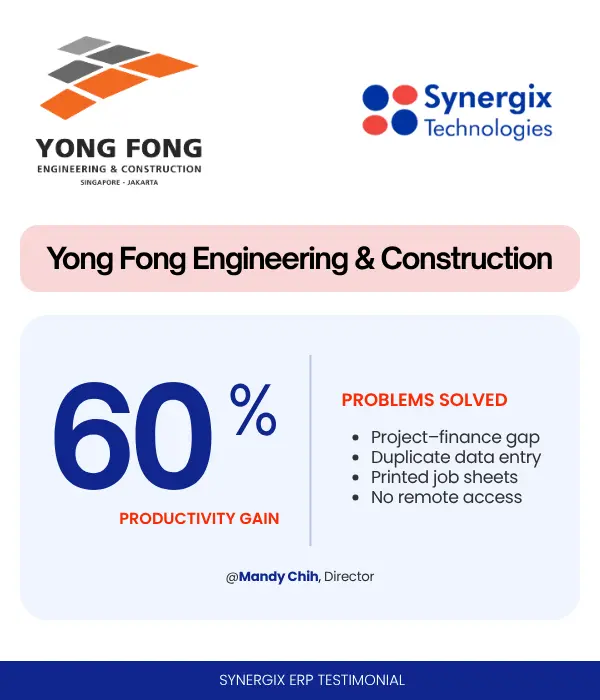
Yong Fong Engineering & Construction – approximately 60% productivity gain
Their biggest problem was the gap between project and finance. Data sat in separate places, the same information was keyed in twice, and job sheets were printed for every job.
We brought project through to finance into one system, so records are traceable from any location at any time. Manual keying dropped, and printing job sheets stopped entirely. Director Mandy Chih reports roughly 60% productivity gain, and expects it to improve further as the team keeps using the system.
Two things come up in nearly every letter: The first is our account management and helpdesk team – customers point to quick turnaround and thorough follow-up. The second is the flexibility to shape the system around how they already work, rather than asking them to work around the software. Because we build the ERP ourselves, we can do that without creating an upgrade problem later.
We’re proud of these results and grateful to the customers who put their names to them. The work isn’t finished: we keep developing the product, including our embedded AI modules, and we keep listening to the requests that come back from the people using it every day.
Key Takeaways
With the benefits that ERP has to offer, the global ERP software market is projected to grow from US$77.1 billion in 2025 to US$157.1 billion by 2033, at a compound annual growth rate of 9.5%, with Asia-Pacific the fastest-growing region, representing an 11.7% annual growth rate.
From 2023 forward, ERP continues to gain popularity in industries ranging from Marine Engineering to Rental Services while covering industries like Construction, Healthcare, Trading and Distribution, Manufacturing, and more.
ERP software is a pivotal tool in modern business operations, and its effective use demands a strategic approach, adaptability to change, and a commitment to ongoing improvement. By embracing these principles, businesses can unlock the full potential of ERP technology and position themselves for success in the ever-evolving business landscape.
Synergix Technologies is proud to be a leading provider of ERP solutions and Cloud ERP software in Singapore. Contact us to understand more about our ERP services.
Contact Us Now