Digital Solution Provider
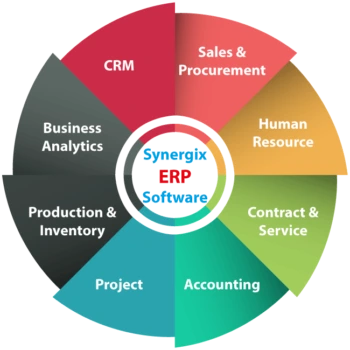
Enterprise resource planning (ERP) is a single software system that runs a company’s core operations – finance, inventory, purchasing, sales, projects, HR and production – on one shared database. Every department reads and writes the same records in real time, so an order, the stock it reserves and the invoice it creates form one connected chain.
Key facts
This guide covers how ERP systems work, the business functions it covers, the types available, what one costs in Singapore, and how to judge whether your business is ready. If you already know the basics and want to see how ERP applies to your sector, start with our ERP solutions by industry.
ON THIS PAGE
In simple words: Enterprise Resource Planning is one system where every team enters and reads the same information, instead of each department keeping its own spreadsheet.
An ERP system brings three things together: your data, your processes, and your plans.
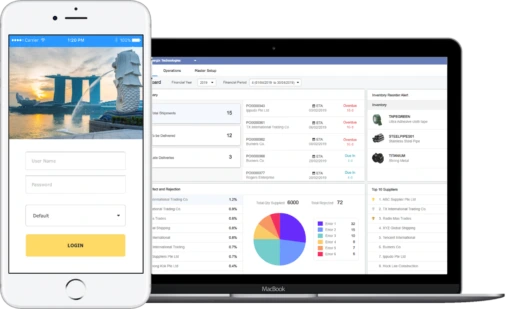
With the advent of cloud-based Enterprise Resource Planning systems, ERP is now far less expensive and way more affordable. It can be said without a doubt that a wide range of industries can use an ERP system to enhance performance and production. It not only integrates data from multiple sources but also works in favor of Business Intelligence.
The platform for business ERP was set way back in the past by the incorporation of MRP or Material Requirements Planning. This was a system that was used to monitor inventory and schedule production processes. Today, Enterprise Resource Management systems cover Business Intelligence and Analytics as well as front office operations like sales force automation, marketing automation, and eCommerce.
It’s essential to delve into the specifics of ERP systems’ design, parts, and complex database structures in order to fully understand how they operate.
Business ERP is mostly multi-tier structured, composed of three essential layers:
Organisations often enhance ERP systems by adding customisation and integration modules to align them with their unique requirements.
In a disconnected setup, a customer exists three times: once in the quotation spreadsheet, once in the delivery system, once in the accounting package.
An ERP holds that customer once. Change the credit term and every open quotation, order and invoice reflects it immediately. The same applies to item codes, unit costs, supplier terms and account mappings.
This is also why ERP data is auditable in a way spreadsheets are not. Every transaction points back to the master record it used and the document that created it, so a figure in a management report can be traced to the delivery order behind it.
It’s no exaggeration to say that an ERP system is essential for any modern-day company, especially those that aim to streamline their internal operations, adapt to the dynamic needs of their customers, and scale their business operations.
ERP systems automate time-consuming manual tasks, cut down on data entry slip-ups, and give users instant access to vital information. This upswing in efficiency not only leads to cost savings but also frees up employees to concentrate on tasks that truly add value.
ERP software offers a single source of truth for data, ensuring data accuracy and consistency. Real-time reporting and analytics capabilities empower businesses with up-to-the-minute insights into their performance, enabling quicker and more informed decision-making.
As businesses grow, ERP systems can smoothly expand to keep pace with their needs. They offer the agility and adaptability required to respond to shifting market dynamics, incorporate new users or features, and stay in sync with emerging technologies.
| Cloud | On-premise | Hybrid | |
| Data storage | Vendor-managed data centre | Your own servers | Split by module or entity |
| Access | Browser, any location | Browser, over your network or VPN | Both |
| Upfront cost | Lower | Higher, includes hardware | Middle |
| Upgrade control | Vendor schedule | You choose timing | Mixed |
| Best fit | Multi-site teams, lean IT | Data-residency or infrastructure-control requirements | Regulated data plus mobile field teams |
Where Synergix fits: cloud-hosted or on-premises, from the same product. Synergix ERP runs in a browser either way, so the deployment choice does not limit which modules you can use. On-premises is chosen most often by our construction, marine engineering and manufacturing customers, usually for data-residency or infrastructure-control reasons.
Discuss Your Deployment Options
The difference shows up in implementation cost. Generic systems look cheaper on the quote and get expensive in configuration.
Where Synergix fits: industry-specific, across 12 sectors – construction, construction SOR, architecture, wholesale distribution, general manufacturing, marine engineering, rental and service, waste management, field service, cleaning, laundry and F&B.
The tier that fits is the one whose smallest sensible deployment matches your size.
Where Synergix fits: the SME and mid-market tier, as a Singapore-based vendor. Over 35 years we have implemented for more than 600 Singapore SMEs and 30,000 users.
ERP is modular. You license the functions you need and add more as the business grows.
Warehouse management deserves a note, because it is often assumed to be a separate system. In a connected ERP, it is not: the bin location a picker scans is the same record the sales order reserved and the same one the invoice bills against.
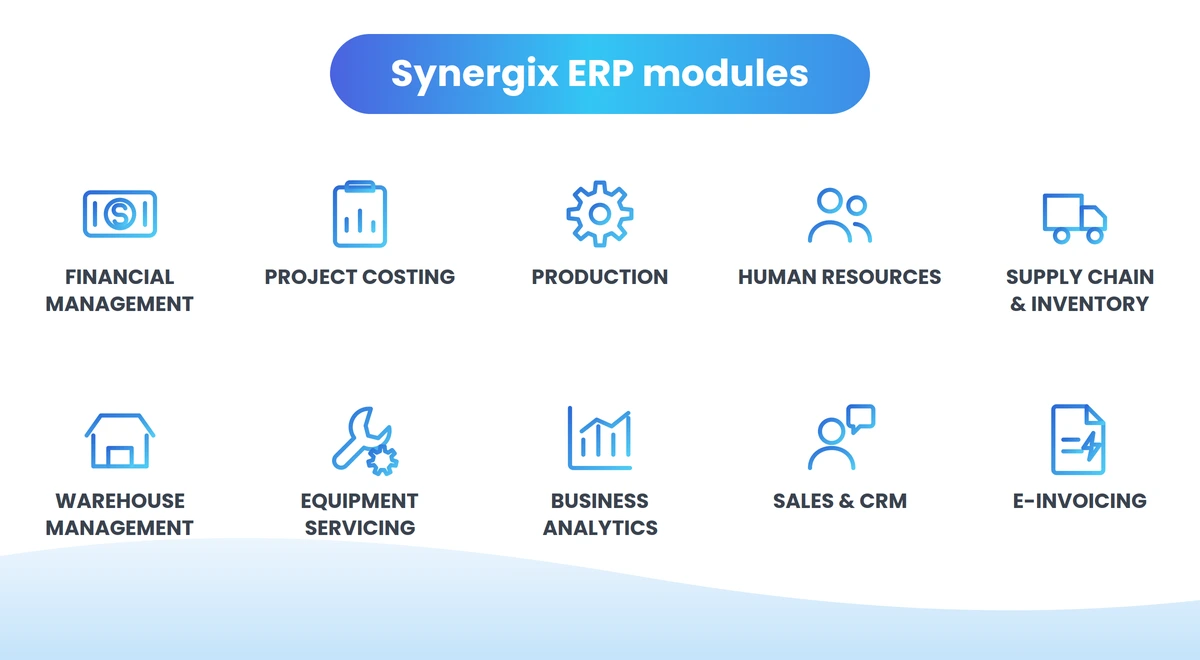
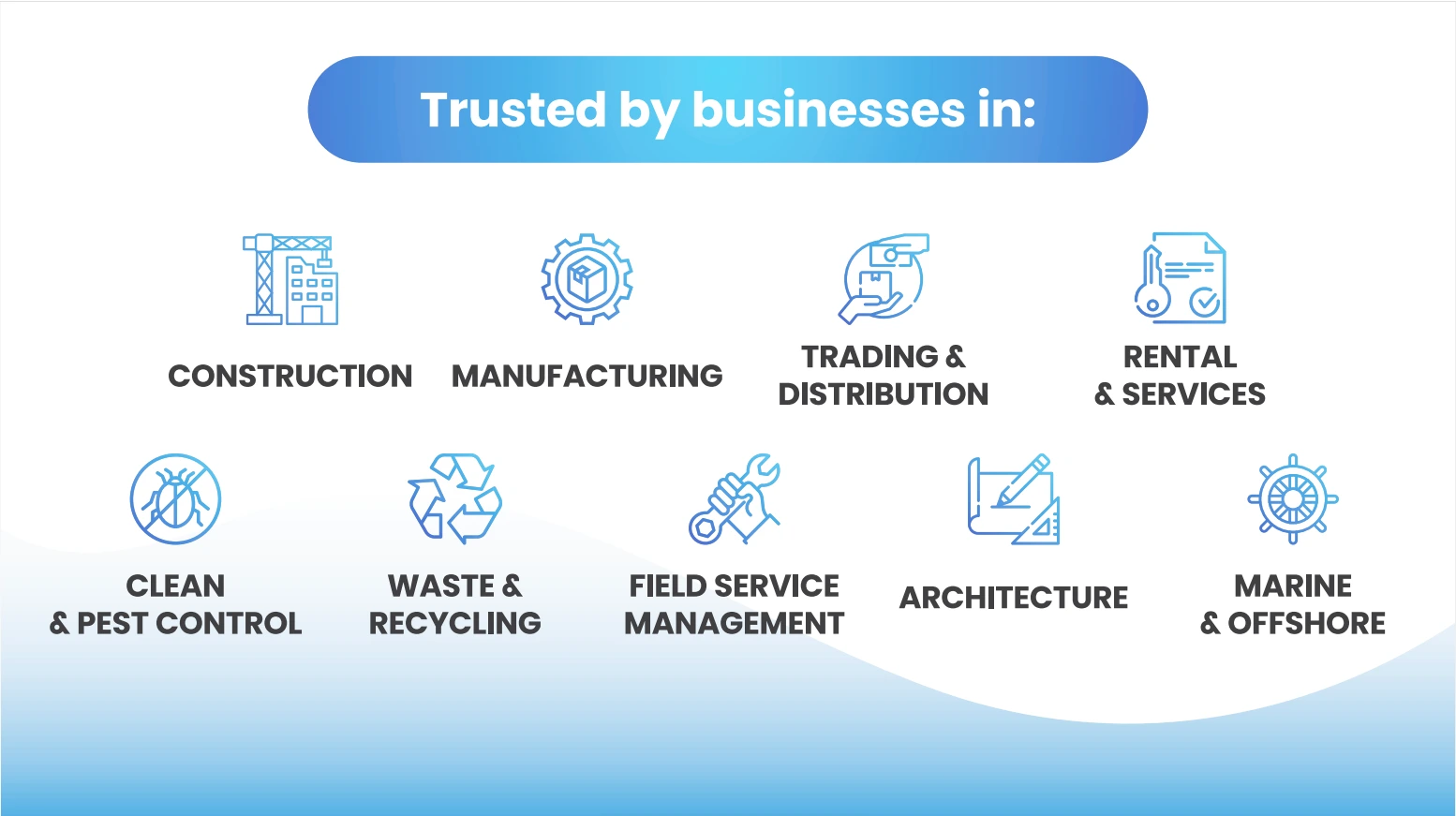
ERP solutions are also tailored to specific industries, addressing their unique demands.
Most companies do not decide to buy an ERP system. They reach the point where the workarounds cost more than the software:
Adding people to a disconnected process makes the process bigger, not faster.
ERP pricing in Singapore is quote-based rather than a fixed licence fee. Three variables set the price:
A useful way to sanity-check a quote is to ask what it includes beyond the licence: implementation, data migration, training, and support after go-live. A low licence figure with those priced separately is often the more expensive option.
Singapore SMEs can offset part of the cost through Enterprise Singapore support schemes (PSG, EDG and MRD). (Source: Enterprise Singapore)
Synergix Technologies is proudly a pre-approved PSG vendor in Sales, Accounting and Inventory Solution under IMDA’s SMEs Go Digital programme, so Singapore SMEs adopting it can apply for PSG support of up to 50% of qualifying cost (as at 2026).
Companies adopting AI capability may also qualify separately under the Enterprise Innovation Scheme (EIS), which carries its own cap for AI projects.
Update: Enterprise Singapore has announced that PSG, EDG and the Market Readiness Assistance grant will be consolidated into a single activity-based scheme, EDGE, launching in the second half of 2026. The existing schemes remain open for applications until it launches.
→ Singapore EDGE grants latest updates
→ Synergix as a PSG pre-approved vendor
Synergix Technologies is proud to be a leading provider of ERP solutions and Cloud ERP software in Singapore. We develop our own ERP system in-house, which is what makes deep customisation possible without putting future upgrades at risk. Industry-specific solutions, business process consulting, implementation, training and long-term local support sit under one roof.
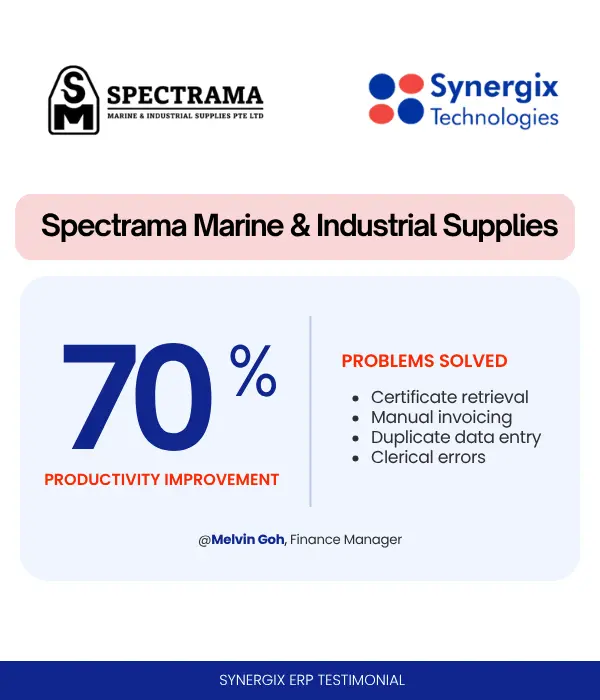
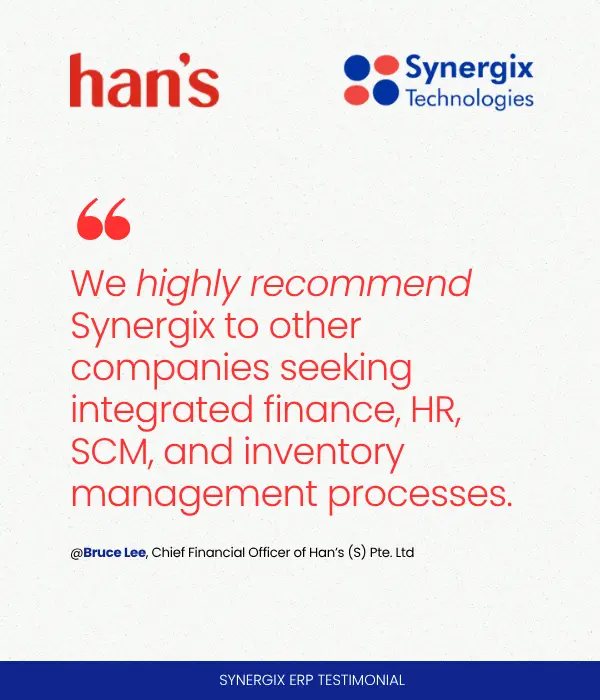
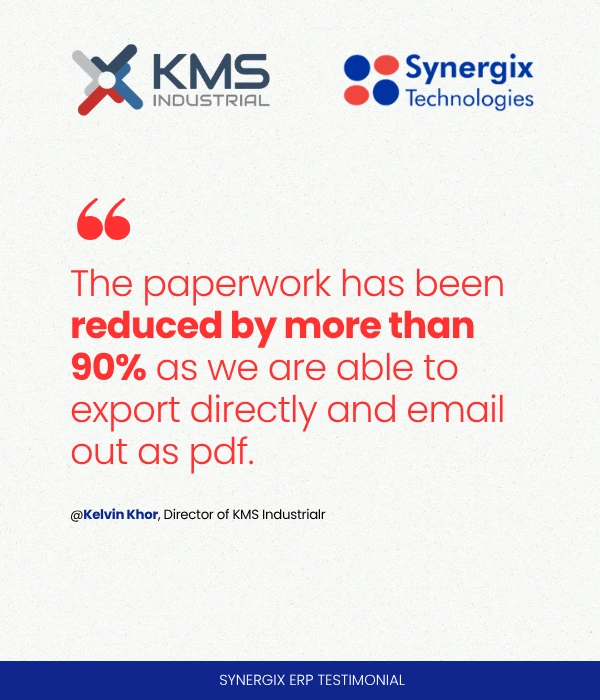
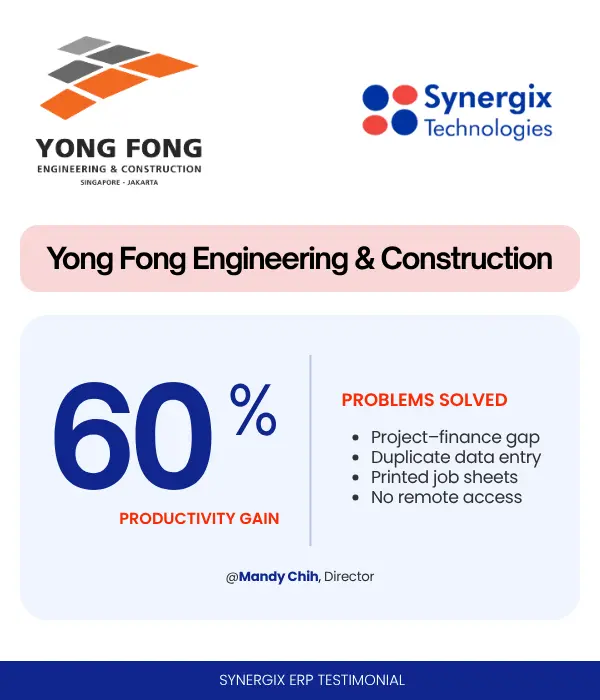
Over 35 years, we’ve worked with more than 600 Singapore SMEs and 30,000 users. Below is what that looks like in practice, taken from signed testimonial letters published in full on our site.
ERP systems have continued to evolve over time, and these crucial business systems still hold a lot of growing potential in the future:
For context on scale: Grand View Research puts the global ERP software market at roughly US$157 billion by 2033, growing 9.5% a year from 2026, with Asia-Pacific the fastest-growing region.
Most ERP demos run on sample data. Ours runs on yours: bring one real workflow, whether that’s a progress claim, a stock reservation or a month-end close, and we will show you how it moves through the system.