



Material requirements planning (MRP) systems arrived in the 1960s, built around the factory: what to make, what to buy, and when. The term enterprise resource planning was coined in 1990, by which point the software had grown well past the production floor to cover finance, sales, procurement and HR on one shared set of records.
Today a fully integrated ERP system reaches every department, from operations such as project and equipment management through to the back office running accounting and payroll. Most systems are cloud-based and run in a browser. The scope you turn on depends on what your business actually runs on, and it extends as the business grows.
Knowing what each part of an ERP system does makes a shortlist much easier to build. Here is what a modern ERP covers, and what to look for in each area.
1. Trading, Distribution and Supply Chain
A strong ERP system brings substantial automation to trading and supply chain processes. The system holds every product detail: brands, categories, specifications, and photographs for identification. Lot and serial number tracking, together with standard costing methods such as FIFO and weighted average, give you traceability across inventory.
Because the system holds price list settings and recorded selling prices and quantities, your salespeople can prepare quotations, route them for online approval, and send them to customers without leaving the system.
 Where stock is short, purchasing raises the request for you, showing historical PO prices for comparison and proposing vendors you have used before. Delivered goods are then checked through Goods Received Notes and QAQC, so accepted items update inventory and rejected ones go back to the supplier.
Stock planning sits alongside this: you can estimate monthly demand so operations keep running. Multi-company groups can also consolidate inter-company transactions and use a global inventory code, which removes the need to maintain separate inventory records for each subsidiary.
2. Project Costing
SMEs in project-based sectors such as Building & Construction need a clear overview of resource management for each project. With an ERP system, users can supervise all projects’ progress through a mobile application on iOS or Android devices.
Accordingly, you can have access on the go to effectively:
- manage work allocation (job location, nature of work, contact of the assigned team members/ leader, and worker attendance tracking) and required inventories (materials, owned/ hired assets),
- raising requests,
- making approvals,
- and monitoring project status.
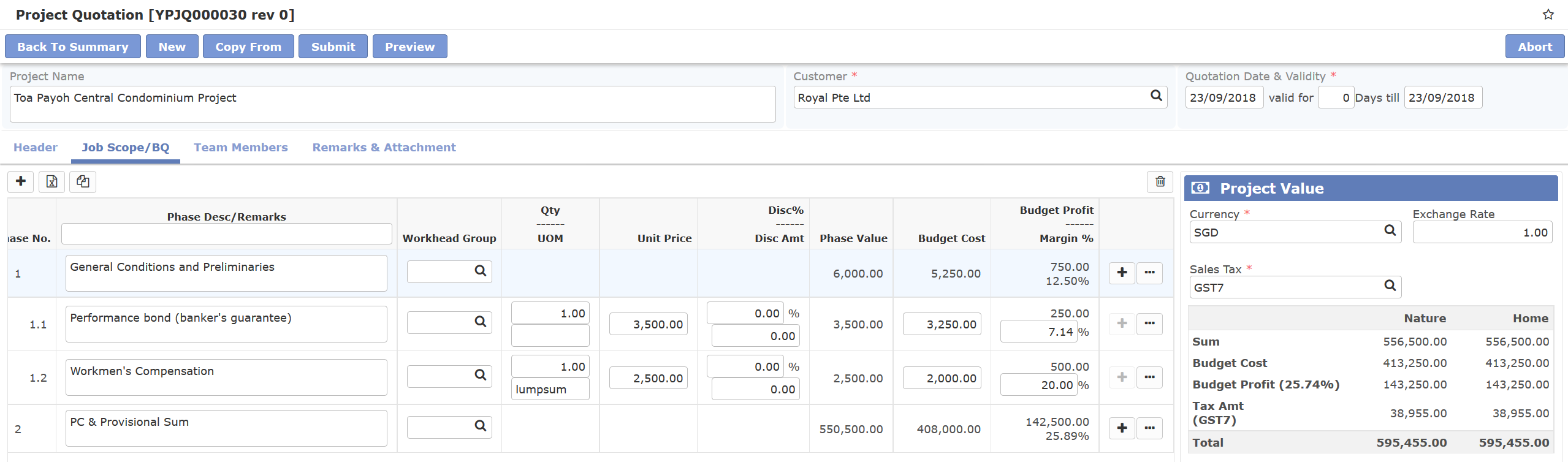
The e-Project Costing Solution in an ERP software can also help to measure the required budgets, allocate costs, and automatically compute each project/ project scope’s profitability.
Based on the estimation and calculation, you can easily monitor each project’s finances and make timely adjustments to avoid overbidding or under-quoting a project. Thereafter, the system allows tracking of all projects’ billings, retention and cost statuses with flexible billing methods conforming to local standards.
3. Manufacturing
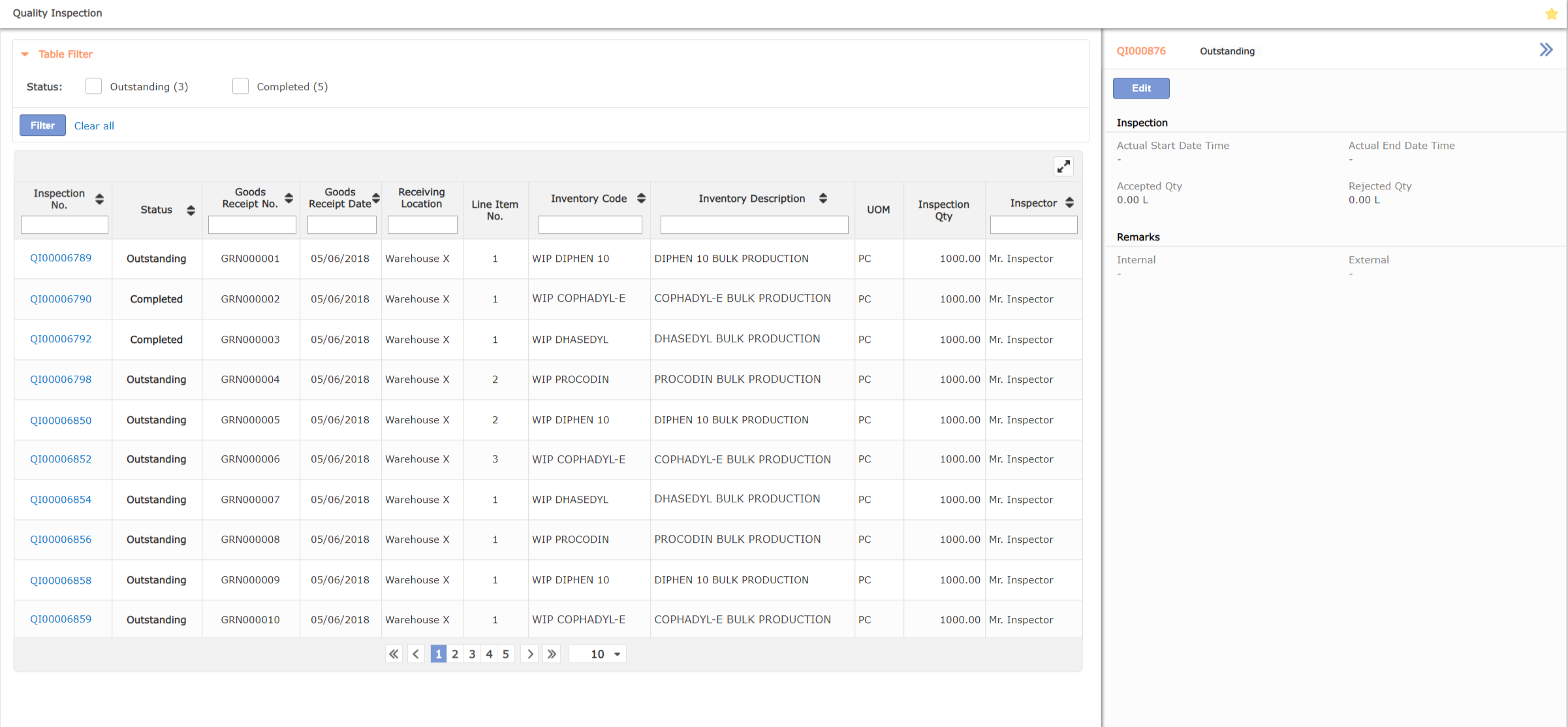
The Manufacturing module remains important in a modern-day ERP system. It provides overall control over your manufacturing performance from order management and material procurement to production status and quality control.
A Manufacturing ERP system solution can monitor material status and production capacity and automatically show alerts to your production team. Using a well-developed algorithm, the system enables effective production planning, which shortens operational time and costs as well as allows prompt response to unforeseen disruptions in your business plan.
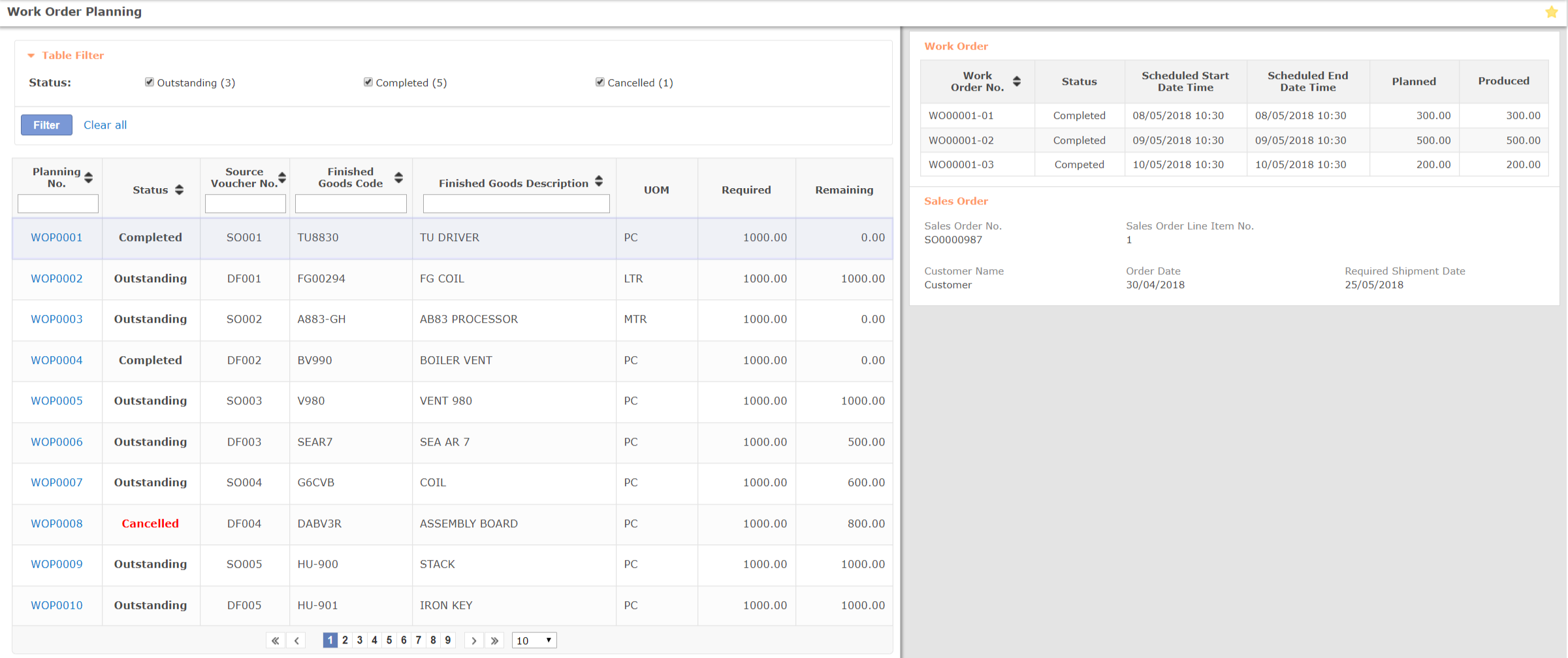
Furthermore, tracking and monitoring bills of materials (BOMs), inventory and workers’ performance can be eased with technology involvement such as serial number tracking and employee ID scanning.
4. Contract Management
ERP modules offer an efficient module that automates the whole process of Contract Management. A streamlined data flow integrated with other operational modules can eliminate mistakes and errors and accelerate your business operations.
On a web-based system, a contract quotation can be submitted anywhere and anytime for approval. The approved contract is then converted and monitored in the system with clear status indicators, such as active, revised, terminated, or expired. Contract dispatching is also part of the automatic system as it is linked to the operational assets and integrated into the barcoding or RFID system.
Lastly, a contract invoice is effortlessly generated based on the billing frequency set up (monthly, bi-monthly, quarterly, bi-annually, annually, and usage).
5. Equipment Servicing Management
Rental, service and field businesses live or die on equipment uptime. Equipment servicing management tracks performance across your equipment fleet, schedules preventive maintenance before a breakdown, and keeps the service history attached to each unit.
Because it sits on the same records as contracts and inventory, a service job knows which contract covers it, which parts were used, and whether those parts are in stock. Optional QAQC and warranty functions sit alongside it, monitoring product failure rates and handling warranty servicing.
6. Customer Relationship Management (CRM)
To retain your existing customers and expand your business, it is extremely important to track your customers’ requirements and behaviors. A CRM integrated into an ERP system can record most of your prospects’ key information, from contact details to follow-up history, creating a consistent real-time information base.
Furthermore, with the ERP system’s web-based mobility, your salesperson can access or update the database whenever needed through their mobile browser on devices such as smartphones, tablets or laptops. As a result, the information flow in your business is transparent, helping your sales activities to operate smoothly without interruption from miscommunication or lack of information.
One main highlight of all ERP modules is the ability to automatically generate reports to provide actual costing of sales activities. Time and cost spent on a lead are recorded to analyse the prospect’s potential value.
7. Human Resource Management (HRM)
An ERP system can provide an HRM module to reduce the workload of your HR department significantly while monitoring employees’ performance properly. From submitting or approving time off and tracking employees’ attendance to generating payslips and payroll reports, as well as allowing multi-level review for staff appraisals, the ERP software can automate the entire HR operational processes and help managers monitor manpower allocation effectively.
8. Financial Management
The complex and time-consuming tasks done by your finance department can be eased with the assistance of a Financial Management module in the ERP software. Based on the recorded data, cash receipts and receivables, as well as invoices and payments, are under your control, as the system will highlight to you any overdue items.
Additionally, preparing financial statements, periodical performance/budget reports, or dealing with multiple currencies is simplified with a mouse click, as you can customise the reporting templates to your own requirements in advance, and the system will generate them accordingly.
9. E-Invoicing and InvoiceNow
Singapore has a regulatory timetable attached to this one. E-invoicing through InvoiceNow lets you send and receive invoices across the Peppol network as structured data rather than PDFs, which removes the rekeying at both ends.
Under the GST InvoiceNow Requirement, GST-registered businesses are moving in phases to transmitting invoice data to IRAS. An ERP that handles this natively files GST F5 and F8 returns, and IR8A and Appendix 8A submissions through AIS, directly from your accounting records.
Synergix is an IRAS SFFS Silver Partner in the Accounting category, and the system follows Singapore Accounting Standards.
10. Business Analytics (BA)
Keeping an eye on your business performance is necessary but requires a great deal of effort and time. With a Business Analytics function that is linked to your ERP system, you can set up and schedule to receive auto-generated analysis reports of different units daily, weekly or monthly, based on your requirements.
The BA module can also identify underperforming sectors based on your preset figures and send you timely alerts through email if there are any sectors with results lower than your base guideline.
With such convenience and flexibility, ERP modules are invaluable for managers to supervise their overall operational performance and make critical decisions to expand the business.
11. Embedded AI
The newest addition to the ERP, and the one changing most quickly. Embedded AI runs inside the ERP rather than as a separate tool bolted onto it, which matters for three reasons: your data stays within the ERP boundary, the AI inherits the roles and permissions you already set, and it understands your actual workflows instead of needing them described each time.
Three capabilities sit at the platform level:
- Document AI turns PDFs and scans into ERP transactions, with 95% extraction accuracy.
- Knowledge Fabric centralises product manuals, sales knowledge and company policies, so staff can ask questions in plain language and get answers drawn from authorised sources.
- Analytics AI turns ERP data into forecasts, detects anomalies and trends early, and writes narrative summaries for reporting.
On top of those sit function-specific assistants. Three-way matching reads a supplier delivery order and invoice, creates the goods receipt note and purchase invoice, and validates item, quantity and price against the PO in under a minute per invoice, with a full audit trail. Demand Forecast AI reads sales history, seasonality and promotions to recommend reorder timing and quantities. Predictive Maintenance combines service logs with live telemetry to draft preventive service tickets before equipment fails.
Every one of these drafts and recommends. Your team reviews and confirms before anything posts.
12. Vertical Extension
ERP modules can also offer Vertical Extensions to cover other sections of your business. You can facilitate sales processes with a mobile sales application, which allows swift checking of inventory balance and inputting orders directly from mobile devices.
A good Wholesale Trade ERP system will work with any Point-of-Sale (POS) system. Together, these applications will streamline your business operations substantially and reduce time wastage in administrative tasks.
Also aiming at optimising your business, our Synergix ERP system offers optional QAQC and Warranty modules to monitor your products’ failure rate and provide warranty servicing, respectively. The system’s Equipment Maintenance Module helps your staff to keep track of your equipment performance and to schedule timely maintenance and prevent technical issues.
Which ERP Modules Does Your Business Need?
Each attribute listed above is tailored to handle specific processes of your organisation. Integrating the ERP modules smoothly will reshape your operational processes altogether and boost your business productivity. Therefore, we suggest you evaluate any ERP system’s functions thoroughly to select the best match for your operations. It is highly recommended to meet with an experienced consultant team to have an even better understanding of your upcoming ERP system.
Feel free to contact Synergix’s consultants anytime to learn more about ERP modules and boost your business productivity with digital transformation!