

![user 150x150 - Retail Business Management Solution for Singapore SMEs [year]](https://www.synergixtech.com/wp-content/uploads/2015/10/user-150x150.png "Retail Business Management Solution for Singapore SMEs [year]")
Synergix
Business Solutions Manager
![Retail Business Management Solution banner - Retail Business Management Solution for Singapore SMEs [year]](https://www.synergixtech.com/wp-content/uploads/2025/07/Retail-Business-Management-Solution-banner.jpg "Retail Business Management Solution for Singapore SMEs [year]")
Managing a retail business today is more than just stocking shelves—it’s about data, customers, and efficiency. The rise in the prices, changing consumer demands, and the costs of competing against both local and international players in the market that is characterized by changing consumer demand and also need to deal with its high prices, are some of the pressures that SMEs have never experienced in the retail store scene in Singapore.
To the retailers in Singapore SMEs, a well-organized retail business management is not an addition to daily necessities but its life-saving treatment. Even if you run a small boutique store in Orchard Road or operate a chain business in different parts of the country, the principle of retail business management may seem significant in the process of distinguishing between the success and survival.
- 1 What is Retail Business Management?
- 2 Core Components of Successful Retail Business Management
- 3 How ERP Systems Simplify Retail Business Management
- 4 Key Roles in Retail Business Management (And How ERP Supports Them)
- 5 Retail Management KPIs You Should Track with ERP
- 6 Choosing the Right ERP System for Your Retail SME
- 7 Conclusion
What is Retail Business Management?
Retail business management is the art of planning, organizing operations and evaluation of all actions that occurs in the selling of products to final consumers. To SMEs this implies having installed structures and mechanisms that will ensure high efficiency but at the same time provide out-of-this-world customer experiences staying within their budget.
The most important reflection of the difference between retail management in the past and nowadays is the approach. Conventional retail management was characterised by manual operations, excel sheets, and instincts. Technology, data analytics, and well-integrated systems are the two features of modern retail business management so that purposeful decisions could be made in a timely manner and in an accurate manner.
Since the retail SME of today has not existed so many years earlier, their issues are unique in character. Multi-store coordination needs real time-pictures across the locations. The management of the Inventory has been complicated with foreign based suppliers and different lead times among them. Customer retention requires individualized experiences that even the small teams cannot cope with manually. This is where ordered management in retail businesses becomes advantageous, as well as indispensable.
Core Components of Successful Retail Business Management
Inventory and Procurement Management
The key to any successful retail is good management of the inventory. It entails just-in-time management of the stocks, supplier relations and making the products available when clients desire them. Inventory management may cause a lot of capital besieged in unsaleable stocks whereas generating shortages of saleable goods to SMEs.
The procurement management today encompasses procurement management beyond ordering. It involves supplier analysis, contract management, quality assurance, and resilience of supply networks capable of responding to shocks. The preference of retailers in Singapore is especially useful given the advantage of its base as a logistics hub to streamline its procurements aims.
Customer Relationship Management (CRM)
Understanding your customers is crucial for retail success. CRM in retail involves collecting customer data, analyzing purchasing patterns, and creating personalized experiences that encourage repeat business. This includes managing sales leads, campaign management, and tracking opportunities throughout the sales pipeline.
Effective CRM systems provide customer transaction history, enabling sales staff to analyze buying behaviors on the spot and quote prices accurately based on previous purchases. This historical data becomes the foundation for building stronger customer relationships and developing business continuity.
Point-of-Sale Integration
Your POS software system does more than just take care of cash flow: it is a data gathering center that will enable you to understand sales and customer data as well as staff performance. In the case of retailers that have multiple stores or field-based salespeople, mobile sales enable them to record order and collect orders even when they are offline and when they are online, data can be automatically synchronized.
None of this integration process requires manual entry of data and also it minimises error which may affect profitability. Having your sales data automatically update inventory levels and customer records, your staff should not pay attention to administration but concentrate on their clients.
Staff Scheduling and Human Resources
The success of retailing experiences great reliance on the aspect of the right people delivering the right product at the right time. Appropriate workforce management involves scheduling the employees according to the traffic, administration of the payroll effectively and proper coverage of the peak seasons.
The issue of labor optimization and service quality benefits the retailers of the SME sector as staff scheduling tools allow streamlining employee time consumption. This entails monitoring the performance of the employees, governing the leaves as well as complying with the regulations of the employment in Singapore.
Retail Sales Performance and KPIs
Measuring performance is essential for continuous improvement. The key performance indicators (KPIs) will assist retailers in getting to know what works and what needs to be modified. This consists of sale data, customer satisfaction rate, as well as efficiency data.
Through constant point of sale monitoring, the SME retailers will be able to make informed decisions regarding all aspects including the product composition as well as the level of staffing. Unless measurement is done, there is no way of knowing whether a change is good or bad to the business.
Omnichannel Selling
Today’s customers expect seamless experiences across all touchpoints. Omnichannel retailing integrates offline stores with online sales channels, social media, and mobile apps to create unified customer experiences.
For Singapore SMEs, omnichannel doesn’t require massive investments. It starts with ensuring consistent pricing and product information across all channels, then gradually adding features like click-and-collect or online ordering with in-store pickup.
![Wholesale Software cta1 - Retail Business Management Solution for Singapore SMEs [year]](https://www.synergixtech.com/wp-content/uploads/2024/11/Wholesale-Software-cta1.png "Retail Business Management Solution for Singapore SMEs [year]")
How ERP Systems Simplify Retail Business Management
Enterprise Resource Planning (ERP) systems designed for retail bring all these components together into a single, integrated platform. Instead of having different systems to handle inventory, sales, customers and accounting details, ERP offers an integrated system that becomes a single source of truth in your business.
Centralized Data Management
With an ERP system, all business data flows into one database. This implies that the inventory levels updated at POS get instant reflection on purchasing systems. In-store employees have access to customer data that is gathered online. Every transaction gets updated in financial data.
This concentration removes the inefficiencies and lapses that arise between alternate departments that deploy different applications. To SME retailers, this implies less time consumed in reconciling data and more moment concentrating on the customers and development.
Automated Inventory Management
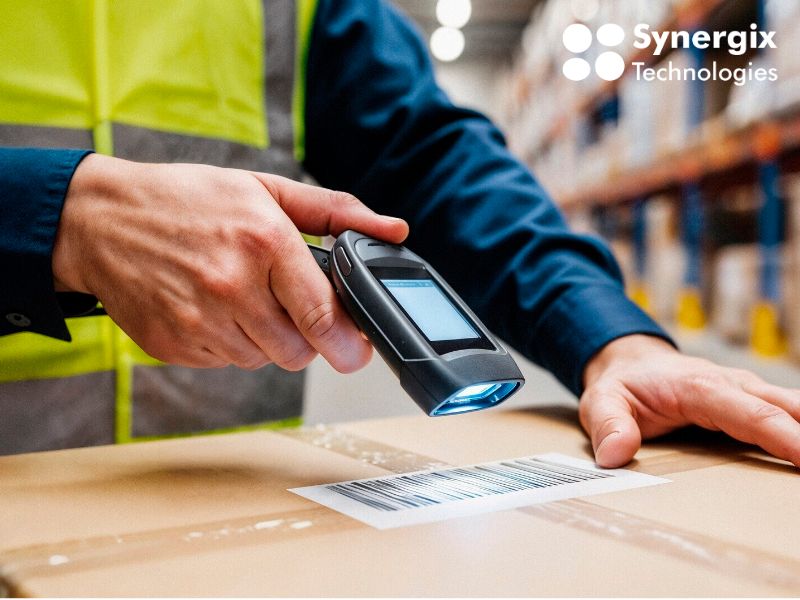
Through the barcode systems, ERP system can keep automatic record of inventory levels, store products by locations, brand, category, supplier and manufacturers. Advanced tracking covers the use of the batch numbers and lot numbers and the use of auto-population of serial numbers to improve accuracy.
With stock reservation tracking, orders will be correctly assigned and back orders, in case they occur can be met as soon as possible. Back-to-back order management will enable creation of purchase requisitions following sales orders automatically and hence an efficient workflow of sales to procurement without direct human interference.
Real-Time Analytics and Reporting
ERP retail systems offer flexible dashboards that allow dragging and dropping charts, tables and panels as a way to have an insight into the company operations. The managers are given a wide range of standard reports with which they are able to observe the performance of sales people and suppliers, product flow and trend.
Business Analytics modules facilitate creation of ad-hoc reports and scheduled reports which automatically email to specified accounts and this makes business intelligence to be freely fetched and distributed within the organization.
Integrated Business Processes
ERP integration means that a single sale updates inventory, customer records, financial accounts, and performance metrics simultaneously. This eliminates duplicate data entry and reduces the errors that occur when information is manually transferred between systems.
For SME retailers, this integration is particularly valuable because small teams can accomplish more when technology handles routine administrative tasks automatically.
How Synergix ERP Helps Singapore Retail SMEs
Synergix ERP offers comprehensive business management capabilities including Customer Relationship Management with Sales Lead Management and Campaign Management, flexible pricing mechanisms for promotional and step pricing, and inventory management with barcode support and serial number tracking. The system includes offline mobile sales functionality, back-to-back order management, and over 500 standard reports with customizable dashboards. As a Pre-Approved Solution under the IMDA SMEs Go Digital Programme, SMEs are eligible for up to 50% Productivity Solutions Grant (PSG) support for adopting Synergix Sales, Accounting, and Inventory modules.
Key Roles in Retail Business Management (And How ERP Supports Them)
![Key Roles in Retail Business Management - Retail Business Management Solution for Singapore SMEs [year]](https://www.synergixtech.com/wp-content/uploads/2025/07/Key-Roles-in-Retail-Business-Management.jpg "Retail Business Management Solution for Singapore SMEs [year]")
Store Manager: Enhanced Control and Automation
Store managers are responsible for daily operations, staff supervision, and achieving sales targets. ERP systems provide managers with real-time dashboards showing sales performance, inventory levels, and staff productivity. Automated alerts notify managers when action is needed, such as low stock levels or unusual sales patterns.
Task automation frees managers from routine administrative work, allowing them to focus on customer service, staff development, and strategic initiatives. Scheduling tools help optimize staff deployment based on traffic patterns and sales data.
Inventory Manager: Precision and Efficiency
Inventory managers need accurate, timely information to make purchasing decisions and maintain optimal stock levels. ERP systems provide detailed inventory tracking through barcode systems, batch and serial number management, and organized categorization by location, brand, and supplier.
Stock reservation features ensure that inventory is properly allocated to sales orders, while back-to-back order management automatically generates purchase requisitions based on sales orders, streamlining the procurement process and ensuring efficient inventory flow.
Sales Assistant: Empowered Customer Service
Front-line staff need quick access to product information, customer history, and pricing details to provide excellent service. ERP systems with mobile capabilities allow sales personnel to collect orders even in remote locations without network connectivity, with automatic synchronization when connection is restored.
Customer transaction history enables sales staff to analyze buying behaviors on the spot and provide personalized service. Flexible pricing mechanisms automatically pull appropriate prices based on customer profiles and quantity ranges, ensuring accurate quotations and efficient sales processes.
Business Owner: Strategic Insights and Control
Business owners need comprehensive visibility into all aspects of their operations to make strategic decisions. ERP systems with customizable dashboards allow owners to drag and drop relevant charts, tables, and panels to monitor sales by customer, salesperson, and date ranges.
With over 500 standard reports available, business owners can analyze sales revenue, profit margins, supplier performance, and product trends. The Business Analytics module enables ad-hoc reporting and pre-scheduled reports that automatically email to designated accounts, providing strategic insights without requiring constant system access.
Retail Management KPIs You Should Track with ERP
Sales per Square Foot
This metric measures how efficiently your retail space generates revenue. ERP systems can calculate this automatically by integrating sales data with store layout information. Tracking this metric helps identify underperforming areas and optimize store layouts.
For Singapore retailers dealing with high rental costs, maximizing sales per square foot is particularly important. ERP analytics can identify which products and categories generate the highest returns per unit of space.
Inventory Turnover Ratio
This KPI measures how quickly inventory is sold and replaced over a period. Higher turnover indicates efficient inventory management, while low turnover suggests overstocking or poor product selection. ERP systems calculate this metric automatically and can break it down by product category, supplier, or time period.
Understanding inventory turnover helps retailers optimize purchasing decisions and identify slow-moving stock before it becomes a problem. This is particularly valuable for fashion and electronics retailers where product lifecycles are short.
Customer Retention Rate
Measuring how many customers return for repeat purchases provides insight into customer satisfaction and loyalty program effectiveness. ERP systems with integrated CRM functionality can track customer purchase history and calculate retention rates automatically.
High retention rates indicate successful customer relationship management, while declining rates may signal service issues or competitive threats that require attention.
Employee Productivity
Tracking sales per employee, transaction processing time, and customer service metrics helps identify training needs and recognize high performers. ERP systems can capture this data automatically through POS integration and time tracking features.
For SME retailers, employee productivity metrics help optimize staffing levels and identify opportunities for performance improvement through training or process changes.
Gross Margin Return on Investment (GMROI)
This advanced metric measures the profitability of inventory investments by comparing gross margin dollars to average inventory investment. ERP systems can calculate GMROI by product, category, or supplier, providing insights into which inventory investments generate the best returns.
GMROI helps retailers make informed decisions about product mix, pricing strategies, and inventory levels. This is particularly valuable for businesses with limited working capital who need to maximize returns on inventory investments.
Choosing the Right ERP System for Your Retail SME
Essential Questions for ERP Vendors
When evaluating ERP systems, retailers should ask specific questions about retail functionality, scalability, and support. Key questions include: Does the system handle multi-location inventory management? Can it integrate with existing POS systems? What reporting and analytics capabilities are included? How does the system handle Singapore-specific requirements like GST?
Understanding implementation timelines, training requirements, and ongoing support options is equally important. SME retailers need vendors who provide comprehensive support throughout the implementation process and beyond.
Importance of Customization and Scalability
No two retail businesses are identical, so ERP systems must be flexible enough to accommodate unique requirements while providing standard functionality that works for most retailers. Look for systems that allow customization without requiring extensive programming.
Scalability ensures that the system can grow with your business. This includes handling increased transaction volumes, additional locations, and new product categories without requiring a complete system replacement.
Local Support and Government Grants
Working with established ERP providers offers advantages in terms of support, training, and understanding of Singapore’s business environment. Proven vendors are familiar with local business requirements and can provide comprehensive implementation support.
Government grants like PSG make ERP adoption more affordable. Synergix ERP is a Pre-Approved Solution under the IMDA SMEs Go Digital Programme, qualifying for up to 50% PSG support for Sales, Accounting, and Inventory modules. This pre-approval status streamlines the grant application process and ensures faster implementation timelines.
![Inventory Turnover Ratio cta1 - Retail Business Management Solution for Singapore SMEs [year]](https://www.synergixtech.com/wp-content/uploads/2024/11/Inventory-Turnover-Ratio-cta1.png "Retail Business Management Solution for Singapore SMEs [year]")
Why Choose Synergix ERP for Retail
Synergix ERP offers comprehensive business management capabilities including Customer Relationship Management with Sales Lead Management, Campaign Management, and Opportunity Management. The system features flexible pricing mechanisms for promotional and step pricing, comprehensive inventory management with barcode support and serial number tracking.
Key advantages include offline mobile sales functionality for field operations, back-to-back order management for efficient procurement, and over 500 standard reports with customizable dashboards. As a Pre-Approved Solution under the IMDA SMEs Go Digital Programme, businesses can access up to 50% PSG support for Sales, Accounting, and Inventory modules. The system can be customized to suit specific business processes, with proven success across various industries including companies like Tungray Singapore Pte Ltd, Union Energy and PDS International.
Conclusion
The world of retail business management in 2025 needs much more than the old methods of doing things, it needs integrated systems that offer visibility on a real-time basis, automation of all the routine as well as allowing one to make decisions based on data. In case of Singapore SMEs, the presence of competitive environment, cost escalation, and a changing customer demand situation necessitates an effective retail management system, instead of the system being optional.
The basis of any successful business is retail ERP systems that gave the possibility to work efficiently, satisfy customers, and develop profitably. ERP helps to streamline business operations by integrating inventory management, customer relationship, sales processing and financial reporting on a single platform. Thus ERP removes business inefficiencies and errors found in systems that are not integrated.
The secret is to select the system that will suit your company in size and its industry needs and future expansion plans. Investing in enterprise-grade technology at pocket-friendly prices, Singapore retailers have more opportunities than they have ever had and with the support of the government from such programs as PSG, they have all the chances to become better equipped and more competitive than ever before.
![facebook 1 150x150 - Retail Business Management Solution for Singapore SMEs [year]](https://www.synergixtech.com/wp-content/uploads/2015/10/facebook-1-150x150.png "Retail Business Management Solution for Singapore SMEs [year]")
![instagram 2 150x150 - Retail Business Management Solution for Singapore SMEs [year]](https://www.synergixtech.com/wp-content/uploads/2015/10/instagram-2-150x150.png "Retail Business Management Solution for Singapore SMEs [year]")
![social 150x150 - Retail Business Management Solution for Singapore SMEs [year]](https://www.synergixtech.com/wp-content/uploads/2015/10/social-150x150.png "Retail Business Management Solution for Singapore SMEs [year]")